Things to Do in Cape Verde: The Best Experiences by Island
From kitesurfing on Sal and turtles on Boa Vista to Cidade Velha on Santiago, morna in Mindelo, Santo Antão trails and the climb up Pico do Fogo: what to do and which island it is on.
By Cape Verde 365 Editorial Reviewed by Alex Borshch, Founder & Editor
Published November 16, 2026 · 11 min read
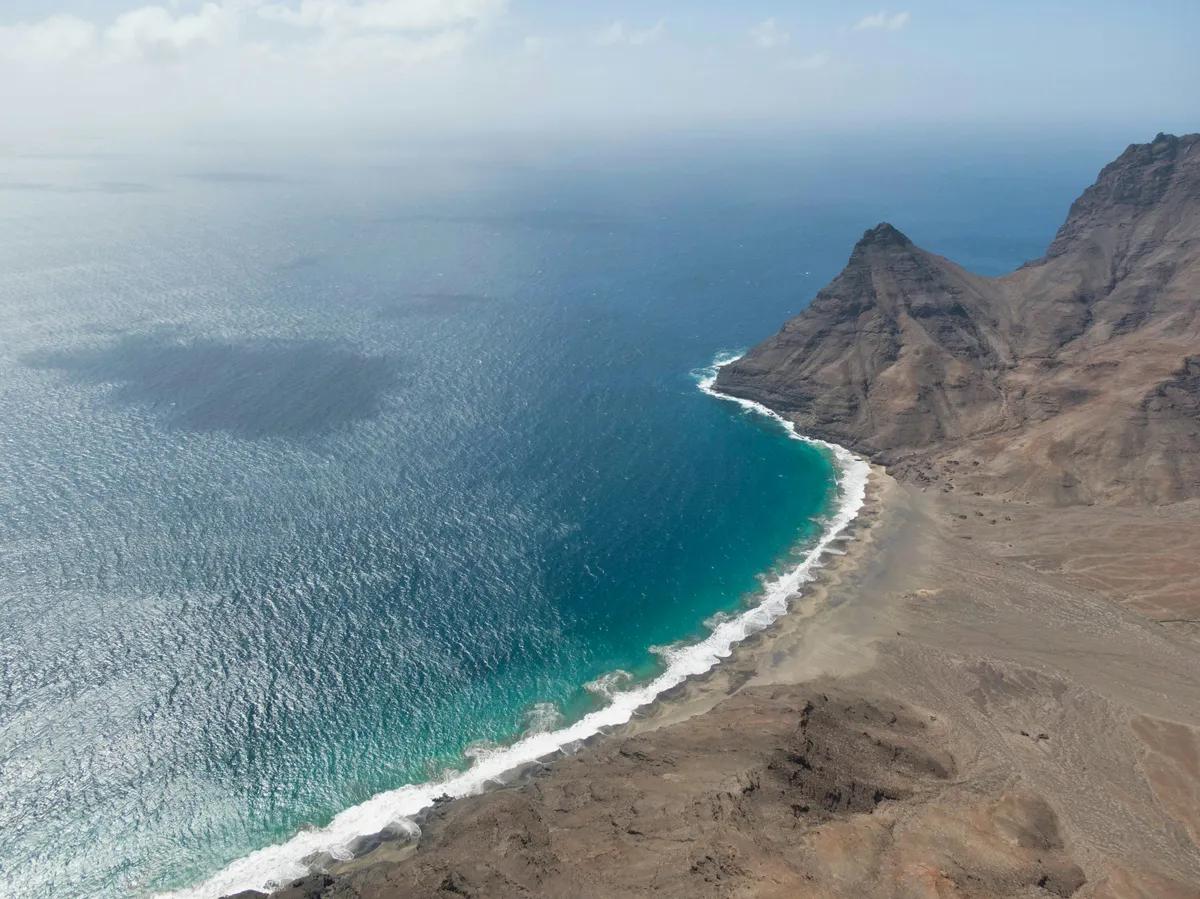
For a beach holiday in Cape Verde (officially Cabo Verde), consider Sal or Boa Vista. The islands also hold a fifteenth-century colonial town, a volcano you can climb, valleys built for walking and a live-music culture that UNESCO recognises. The catch is that each experience sits on a particular island, and moving between islands takes planning. This guide is organised by interest, with the island named for every item, so you can see what is realistic from where you are staying.
Spend lazy days on the beaches
The best beaches are on the flat eastern islands. On Sal, Santa Maria beach is the classic: long, white and facing south, away from the prevailing wind, with the town of Santa Maria right behind it. On Boa Vista, Praia de Santa Mónica and Praia de Chaves run for kilometres with hardly a building in sight, and Praia de Estoril is the easy town beach at Sal Rei.
Elsewhere, Tarrafal beach on Santiago sits in a calm, curved bay, Bitxe Rotxa on Maio is close to empty, and Laginha is Mindelo's town beach. Whichever you choose, the UK government's travel advice warns that tides and currents around the islands are very strong: swim where a lifeguard is on duty and follow the flags. Browse all Cape Verde beaches for more.
Ride the wind and get in the water
Sal is the wind-sports island. The tourism institute recommends December to March for wind sports, which is why Kite Beach on the east coast and Ponta Preta in the south-west fill with riders. Schools on Sal teach kitesurfing and windsurfing from first lessons upward, and when the swell arrives Ponta Preta is also a surfing spot for experienced riders.
Under the water, scuba diving and snorkelling trips leave from Santa Maria and Sal Rei, and sport fishing boats head offshore for big game. On Sal, Shark Bay is a shallow reef flat where juvenile lemon sharks use the water as a nursery all year round; you wade in and watch them circle. Stay calm, keep your hands to yourself and let them come to you.
Watch turtles and whales
Boa Vista is an important loggerhead turtle nesting island in Cape Verde. The nesting season runs from June to October, and hatchlings emerge from August to December. Nesting also happens on Sal, where it is monitored by local conservation teams.
The nesting season is longer than the permitted observation window. As of November 2026, Project Biodiversity gives the 2026 observation dates as 1 July to the end of September, excluding specific nesting beaches. Confirm future dates with a licensed operator. According to the conservation group Project Biodiversity, turtle watching must be done on a certified or government-licensed guided tour, and going onto nesting beaches at night without a guide is prohibited during the season. Wear dark clothes, switch off every light and phone flash, keep no more than ten people behind a nesting female, approach only once she has started laying, and never touch her or block her path to the sea.
In late winter and spring, humpback whales come to breed. The breeding season runs from February to May, and researchers have described the bay off Sal Rei on Boa Vista as the single most important winter breeding bay for humpbacks in the eastern North Atlantic. Book whale watching from Boa Vista between those months for the best chance.
Float in salt and cross the desert
Two islands look more like the Sahara than the Atlantic. On Sal, the Pedra de Lume salt crater has salt pans set inside the crater of an extinct volcano; the brine is so dense that you float without effort. The same half-day island tour usually takes in the Buracona blue eye, a sunlit rock pool on the west coast, and the shimmering flats of Terra Boa.
On Boa Vista, desert and dune tours can explore the Viana desert, the dunes protected in the Morro de Areia nature reserve, and the north coast to the rusting hull of the Cabo Santa Maria shipwreck.
Walk through history on Santiago
Santiago is where Cape Verde's story begins. Cidade Velha, settled in 1462 as Ribeira Grande, was the first settlement on the islands and became the country's first UNESCO World Heritage site in 2009. Walk its old streets, then climb to the Fort Real de São Filipe for the view over the town and bay.
In the capital, Praia, the old town on the Platô has the markets, squares and government buildings. In the north, near Tarrafal, the Tarrafal camp museum occupies the former prison camp where Portugal's dictatorship held political prisoners; it began operating on 29 October 1936 and, after a break, held its last prisoners until 1 May 1974. It is a sobering, important visit. Between the two, the Serra Malagueta Natural Park offers green hill walks.
Hear live music in Mindelo
Music is the country's best-known export, and Mindelo on São Vicente is its home town. Morna, the slow, aching song form that Cesária Évora carried around the world, was inscribed on UNESCO's Representative List of the Intangible Cultural Heritage of Humanity in 2019. Evenings in Mindelo's old town are the easiest place to hear it live; see live music and morna.
Time a trip for a festival if you can. The Mindelo carnival is associated with Carnival Tuesday, which falls on 9 February in 2027; this calendar date does not confirm a 2027 parade programme. In August the Baía das Gatas festival fills the beach of the same name. On Santiago, the Atlantic Music Expo has published dates of 5 to 8 April 2027 in Praia, and it runs just before the Kriol Jazz Festival. See all Cape Verde events.
Hike the valleys of Santo Antão
Santo Antão is the walker's island, a block of mountains split by deep green valleys and terraced fields. The Paul valley is the best known, with sugar cane, villages and paths down to the sea, and the village of Fontainhas clings to a ridge above a terraced ravine. Much of the best walking lies inside the Cova, Paul and Ribeira da Torre Natural Park.
The island has no operating airport (a new one is planned at Porto Novo), so you arrive by ferry from Mindelo. Plan routes with hiking in Santo Antão, and use the 7-day São Vicente and Santo Antão hiking itinerary to combine walking days with nights in Mindelo.
Climb the volcano on Fogo
Fogo is a single volcano rising out of the sea. Its summit, Pico do Fogo, reaches about 2,829 metres, the highest point in Cape Verde. Below it lies Chã das Caldeiras, a plain inside the old crater where people live and grow grapes, and where an eruption that began on 23 November 2014 destroyed much of the village of Portela. The uplands include Fogo Natural Park.
Climbing Pico do Fogo is a steep, loose scramble that takes most of a day; go with a local guide, start early and carry plenty of water. Reach Fogo via Santiago; the Santiago and Fogo 7-day itinerary shows how. The UK government notes that sea travel to Fogo and Brava is often disrupted, so leave slack in your plans.
Eat cachupa and taste grogue
Cape Verdean food is hearty and built on corn, beans and fish. Cachupa, a slow-cooked stew of corn and beans with vegetables and often meat or fish, is the national dish; the next morning, leftovers are fried into cachupa refogada. Look for grilled lobster, caldo de peixe fish soup, pastel com diabo dentro (pastries with a spicy filling) and goat's cheese served with papaya jam.
Grogue is a local sugar-cane spirit. Sweeter ponche, is made with grogue. Browse Cape Verdean dishes for more.
Fitting it together
- One week, one island: beaches, wind sports and an island tour on Sal or Boa Vista. Read things to do in Sal or things to do in Boa Vista.
- One week, two linked islands: São Vicente with Santo Antão, or Santiago with Fogo.
- Ten days or more: a beach island plus one of those pairs, joined by a domestic flight. See the island-hopping guide.
Not sure where to base yourself? Which Cape Verde island is best compares them all, and the best time to visit explains the wind and the short wet season.
Frequently Asked Questions
What is Cape Verde best known for?
Long white beaches and steady wind on Sal and Boa Vista, morna music and Cesária Évora, the Fogo volcano, hiking on Santo Antão, and Cidade Velha, the country's UNESCO World Heritage site on Santiago.
Is there more to do in Cape Verde than the beach?
Yes, but much of it is on other islands. Santiago has the history, São Vicente the music, Santo Antão the hiking and Fogo the volcano. From Sal or Boa Vista, the main non-beach activities are island tours, desert trips, turtle and whale watching and water sports.
When can you see turtles and whales in Cape Verde?
Loggerhead turtles nest from June to October, with hatchlings from August into December. Humpback whales breed from February to May, especially off Boa Vista. Watch turtles only on a certified guided tour within the authorised observation window.
Can you climb Pico do Fogo without a guide?
The climb is steep, loose and long, and the tourism institute says the trail must be accompanied by a local mountain guide. Start early, carry plenty of water and check conditions in Chã das Caldeiras the day before.
What should I eat and drink in Cape Verde?
Try cachupa, the national corn and bean stew, and its fried breakfast version, cachupa refogada, plus grilled fish and lobster and goat's cheese with papaya jam. To drink, taste grogue, the local sugar-cane spirit, or the sweeter ponche.
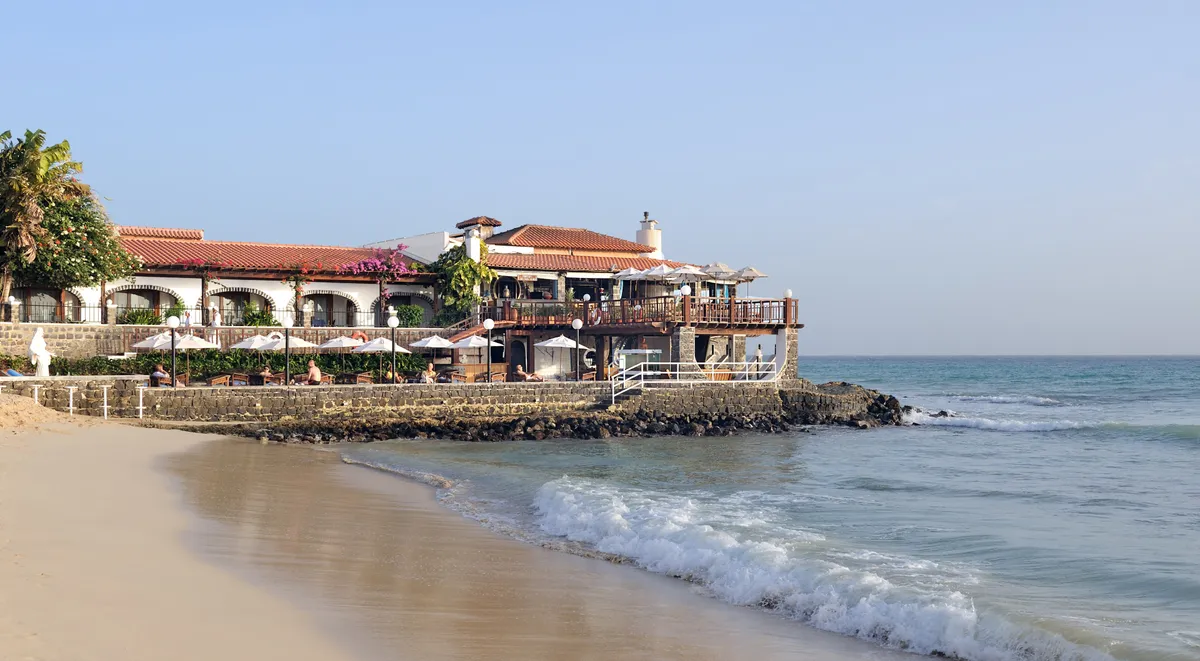
Sal
This guide covers Sal. Explore more about this destination.
View Destination
Photo gallery
Aerial view of a curving beach below rugged cliffs on São Vicente
Photo by Secret Travel Guide secret-travel.guide on Unsplash · Unsplash License