Which Cape Verde Island Is Best? An Honest Island-by-Island Comparison
Sal and Boa Vista for beaches and easy flights, Santo Antão for hiking, São Vicente for music, Santiago for history, Fogo for the volcano: a fair comparison table and realistic combinations.
By Cape Verde 365 Editorial Reviewed by Alex Borshch, Founder & Editor
Published November 16, 2026 · 10 min read
Cape Verde (officially Cabo Verde) is not one destination but nine inhabited islands, and the gap between them is wide. Sal and Boa Vista are flat, sandy and windy, built around resort holidays. Santo Antão is a wall of green ravines with no beach life to speak of. Fogo is a single volcano. Mindelo on São Vicente is a port town that runs on music. Picking the wrong island for what you want is the most common way to come home disappointed, so this guide compares them honestly and then suggests combinations that work on the ground.
A quick piece of geography explains most of the differences. Sal, Boa Vista and Maio are low, level and dry, with long sandy beaches. Santiago, Fogo, Santo Antão and São Nicolau are mountainous, with upland valleys and walking trails. If you want sand, look east. If you want mountains, look west and south.
The islands compared at a glance
The table gives editorial ratings for beaches, wind exposure, walking, culture and quiet, rather than measured rankings. Flight access is described in general terms for travellers from the UK and Ireland, because routes change every season; always check current schedules before you book.
| Island | Beaches | Wind | Hiking | Culture and music | Quiet | Flights from the UK and Ireland | Easy to combine with |
|---|---|---|---|---|---|---|---|
| Sal | Excellent, long white sand at Santa Maria | Strong and steady, especially in winter | Very limited | Light; resort entertainment | Low around Santa Maria | Check current direct holiday flights | São Vicente, subject to current flights |
| Boa Vista | Excellent, very long and empty | Strong; some beaches exposed | Limited (desert walks) | Light; Sal Rei has local life | High away from the resorts | Check current holiday flights | Sal (awkward, see below) |
| Santiago | Good at Tarrafal, mixed elsewhere | Moderate | Good (Serra Malagueta) | Strong: history, capital, festivals | Medium | Usually a connection | Fogo, Maio |
| São Vicente | Fair: Laginha, São Pedro, Baía das Gatas | Strong at times | Some (Monte Verde) | Very strong: live music, carnival | Medium | Usually a connection | Santo Antão (ferry) |
| Santo Antão | Poor; rocky coast | Sheltered valleys | The best in the country | Rural life, grogue | High | No operating airport; ferry from Mindelo | São Vicente |
| Fogo | Black volcanic sand, rough sea | Moderate | Excellent but demanding (the volcano) | Colonial São Filipe, Bandeira festival | High | Connection plus a domestic flight | Santiago |
| Maio | Very good and almost empty | Strong | Limited | Quiet village life | Very high | Connection, then ferry or domestic flight | Santiago |
| São Nicolau | Limited | Moderate | Good (Monte Gordo area) | Small towns | Very high | Connection plus a domestic flight | Check current ferry or flight connections |
Brava, the smallest inhabited island, is left out of the table because reaching it depends on the ferry from Fogo, which the UK government notes is often disrupted. It suits travellers with time to spare and flexible plans.
Sal: a beach-holiday base
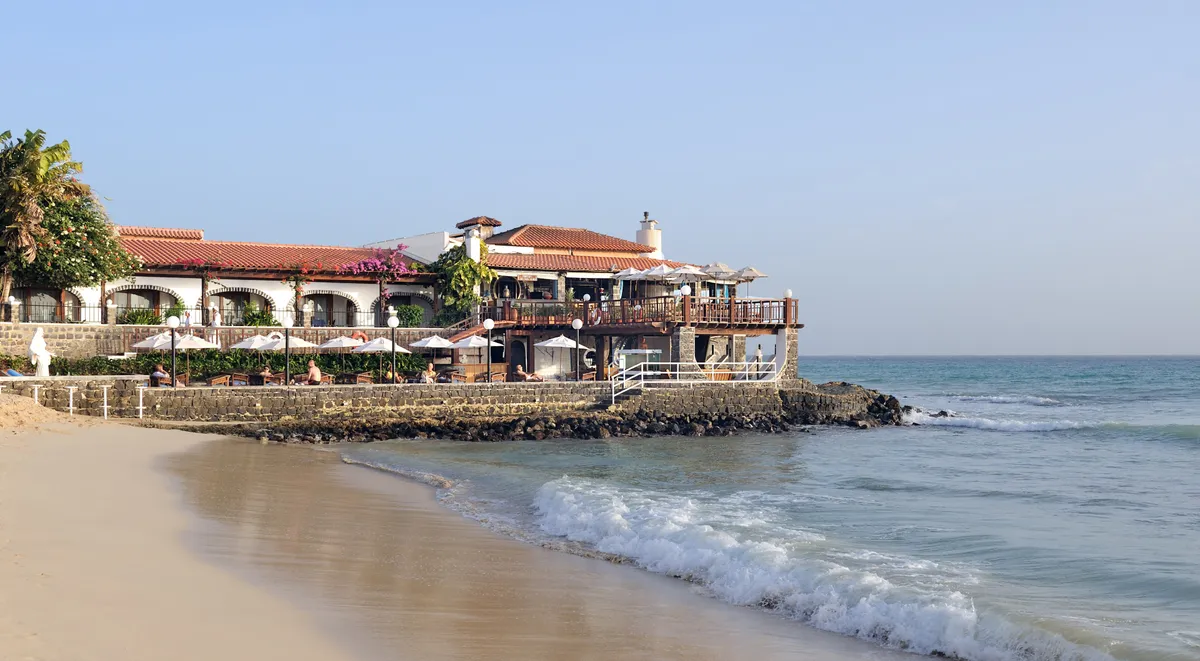
Sal is a popular beach-holiday base. Sal airport handled about 1.58 million passengers in 2025 according to its operator, and the drive to Santa Maria at the southern tip is short. Santa Maria beach faces south, away from the prevailing north-east wind, but wind shelter does not establish safe swimming conditions. The town has restaurants, bars and the Santa Maria pier; check the location of your hotel.
Sal is also the kitesurfing island. Kite Beach on the east coast and Ponta Preta draw riders through the windy months, and kitesurfing and windsurfing schools cater to beginners. Inland, the island is flat and brown, but it has three easy half-day trips: the Pedra de Lume salt crater, where salt pans fill an old volcanic crater and you can float in the brine; the Buracona blue eye pool on the west coast; and Shark Bay, where juvenile lemon sharks use the shallows as a nursery all year.
Pick Sal if you want a straightforward winter-sun week with plenty of flight options, a walkable resort town and wind sports. Skip it if you want greenery, hiking or a sense of traditional island life.
Boa Vista: bigger beaches, more space
Boa Vista looks like a piece of the Sahara dropped into the Atlantic. For broad beaches, consider Praia de Santa Mónica and Praia de Chaves, which run for kilometres. Check current flights and the transfer to the main town, Sal Rei. Many visitors stay in large all-inclusive resorts spread along the coast, so check how far yours is from town before you book if you want to wander out to eat.
Boa Vista is the island for wildlife. It is an important loggerhead turtle nesting island. Turtle watching requires certified guides and authorised observation dates, which are shorter than the June to October nesting season. As of November 2026, Project Biodiversity gives 1 July to the end of September for 2026, excluding specific nesting beaches; confirm future dates before booking. From roughly February to May, humpback whales gather to breed off the island, and researchers have described the bay of Sal Rei as the single most important winter breeding bay for the species in the eastern North Atlantic; see whale watching. The Viana desert and the Cabo Santa Maria shipwreck are the classic desert and dune tour stops.
Pick Boa Vista if you want huge empty beaches, an all-inclusive base, turtles or whales. Skip it if you want a lively town on your doorstep or easy access to other islands.
Santiago: history, the capital and a real African city
Santiago is the largest island and the most Cape Verdean in feel. Praia, the capital, has a compact old town on the Platô, markets and the April music events. A short drive west along the coast, Cidade Velha, founded by the Portuguese in the fifteenth century, became the country's first UNESCO World Heritage site in 2009; the Fort Real de São Filipe looks down on it. In the north, Tarrafal has a calm bay beach and the Tarrafal camp museum, the former prison camp opened under Portugal's dictatorship in 1936. The Serra Malagueta Natural Park gives the island proper hill walking.
Pick Santiago if you care about history, food and everyday life more than resort comfort. It pairs naturally with Fogo.
São Vicente and Santo Antão: music and mountains
Mindelo, the port town of São Vicente, is the cultural centre of the country. Morna, the slow song form made famous by Cesária Évora, was added to UNESCO's list of intangible cultural heritage in 2019, and evenings in Mindelo are the easiest place to hear it; see live music and morna. Mindelo's old town is walkable and the Mindelo carnival is a major annual event. Beaches here are modest: Laginha is the town beach, with São Pedro and Baía das Gatas further out.
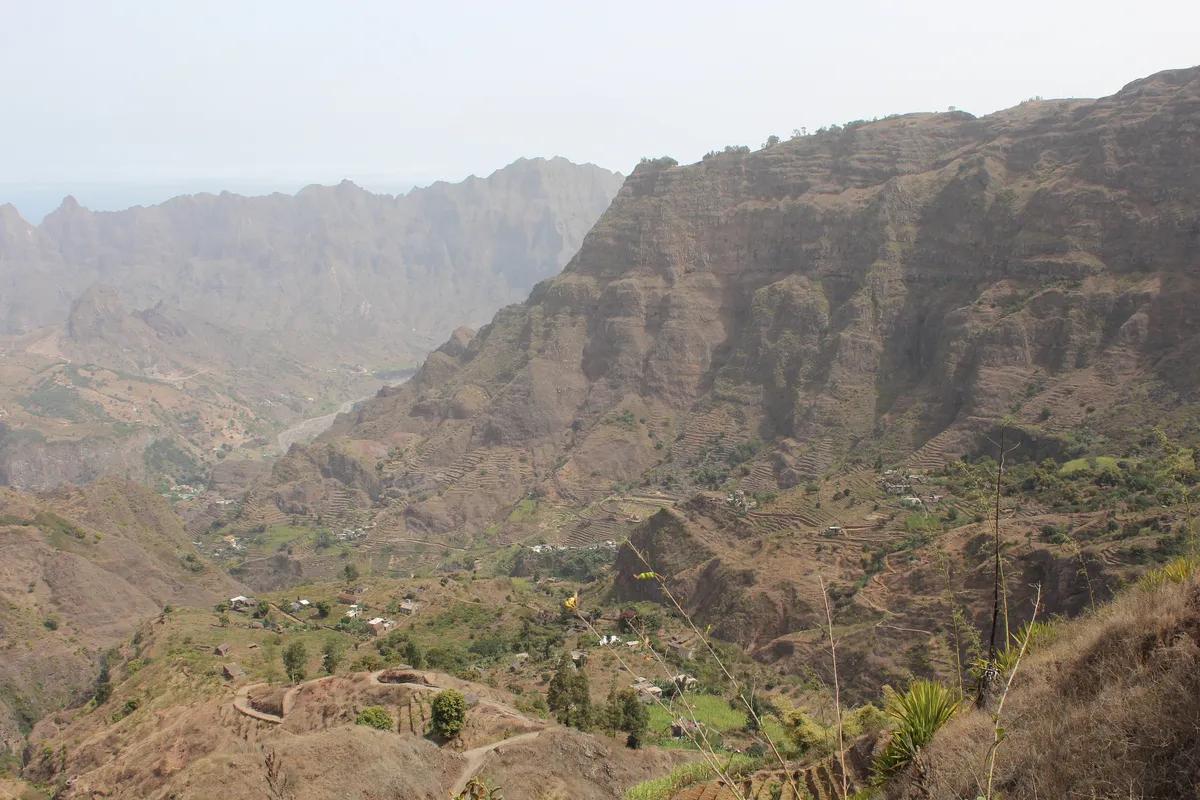
Across the channel, Santo Antão is the hiking island, with terraced valleys, cliff paths and villages reached on foot. The Paul valley and the cliff-side village of Fontainhas are the famous names; see hiking in Santo Antão. There is no operating airport (a new one is planned at Porto Novo), so you arrive by ferry from Mindelo.
Pick this pair if you want culture by night and serious walking by day. It is the best two-island combination in Cape Verde.
Fogo: the volcano
Fogo rises to Pico do Fogo, at about 2,829 metres the highest point in the country. Inside the old crater, the plain of Chã das Caldeiras holds villages rebuilt after the eruption that began on 23 November 2014 and buried much of them in lava. Climbing Pico do Fogo is a steep, loose, full-day effort; the tourism institute says the trail must be accompanied by a local mountain guide. The town of São Filipe is colonial and handsome, and the Bandeira de São Filipe festival peaks around 1 May. The uplands include Fogo Natural Park.
Pick Fogo if you want one extraordinary landscape and do not mind basic lodging. Reach it via Santiago.
Maio and São Nicolau: for real quiet
Maio has the sand of Sal with a fraction of the visitors; Bitxe Rotxa beach near Vila do Maio is typical. São Nicolau is mountainous, green in places and very little visited. Both need a domestic flight or a ferry, and both reward travellers who are happy with simple guesthouses and slow days.
Best island for...
- A first winter-sun week: Sal, for flight choice and a walkable resort town.
- Families wanting space and an all-inclusive: Boa Vista, choosing a resort with a sheltered swimming area or a pool.
- Kitesurfing and windsurfing: Sal first, then Boa Vista.
- Turtles and whales: Boa Vista (turtle tours on authorised summer dates, whales roughly February to May).
- Hiking: Santo Antão, with Fogo for a single big summit.
- Music and nightlife with local character: Mindelo on São Vicente.
- History: Santiago, for Cidade Velha and Tarrafal.
- Getting away from everyone: Maio or São Nicolau.
Combinations that work
Inter-island travel is the part that catches people out. Check current domestic flight routes directly with the airline and ferry sailings with the operator. The UK government warns that sea conditions can be dangerous and that travel to Fogo and Brava can often be disrupted. Build in a spare day and read the island hopping page and the island-hopping guide before you commit.
- São Vicente and Santo Antão (7 days or more): a practical pairing, subject to the current ferry timetable and sea conditions. See the 7-day hiking itinerary.
- Santiago and Fogo (7 days or more): history plus the volcano. See the Santiago and Fogo itinerary.
- Sal plus São Vicente (10 days or more): beach first, then culture, subject to a suitable domestic flight being available.
- Sal and Boa Vista: possible but awkward in one week; the Sal or Boa Vista guide explains why.
If you only have a week and want a beach, stay on one island. Our Sal 7-day itinerary and Boa Vista 5-day itinerary show how to fill the time, and the best time to visit covers the wind and the short wet season.
Frequently Asked Questions
Which Cape Verde island is best for a first visit?
For most first-time visitors from the UK and Ireland, Sal. Check direct flights for your dates; Santa Maria offers a resort-town base and a south-facing beach. If you would rather have more space and a quieter all-inclusive, choose Boa Vista.
Which Cape Verde island has the best beaches?
Sal and Boa Vista offer white-sand beaches, with Maio a quieter alternative. Beach conditions vary; Santa Maria is a convenient town base. Currents around the islands can be strong, so swim only where a lifeguard is on duty.
Which island is best for hiking?
Santo Antão, reached by ferry from Mindelo on São Vicente. Fogo offers the demanding climb of Pico do Fogo, and Santiago has good trails in the Serra Malagueta Natural Park.
Can I visit two islands in one week?
Consider São Vicente with Santo Antão, or Santiago with Fogo, if the current transport schedules leave enough contingency time. Pairs that depend on infrequent sailings or flights, such as Sal and Boa Vista, are harder. Leave a buffer day before your flight home.
Which island is the least windy?
Exposure varies by coast and valley. Ask about conditions at the specific beach or walking route; a whole-island wind ranking cannot predict the day's weather.
Sal
This guide covers Sal. Explore more about this destination.
View Destination
Photo gallery
Terraced valley and steep rugged mountains on Santo Antao, Cape Verde
Photo: Zinneke via Wikimedia Commons · CC BY-SA 3.0 (https://creativecommons.org/licenses/by-sa/3.0)