Things to Do in Sal, Cape Verde: A Guide by Interest
Sal is a beach, wind and water island. This guide sorts its sights by interest, gives the official turtle and whale watching rules, and says plainly what to skip.
By Cape Verde 365 Editorial Reviewed by Alex Borshch, Founder & Editor
Published November 16, 2026 · 9 min read
Sal is a beach-holiday island in Cape Verde. It is flat, dry and windy, with a resort base around the town of Santa Maria on the south coast and its international airport, Amílcar Cabral International (SID), in the middle of the island. The country's official name is Cabo Verde, and Sal is one of its ten islands. What follows is organised by interest, so you can skip straight to what you came for, and it ends with an honest note on what Sal is not good for.
Beaches and swimming
The long sweep of Santa Maria beach is the reason most people book Sal. It runs in front of the town and the hotel strip, with pale sand and turquoise water, and it is the easiest place on the island to spend a lazy day. West of town, Ponta Preta is wilder and better known for waves than for paddling. At the island's southern tip, Ponta Sino is a walk from the hotels for a different angle on the coast, and over on the east side Kite Beach belongs to the wind sports crowd.
Take the sea seriously. The UK government's travel advice says tides and currents around the islands are very strong, that waves can have a strong undertow, and that you should always use beaches where a lifeguard is on duty. It also explains the flag system: red means do not go in, yellow means you can walk in the water but not swim, and green means it is safe to swim. Ask at your hotel which stretches are supervised, and treat the empty beaches away from Santa Maria as places to look at rather than swim.
Wind, waves and water sports
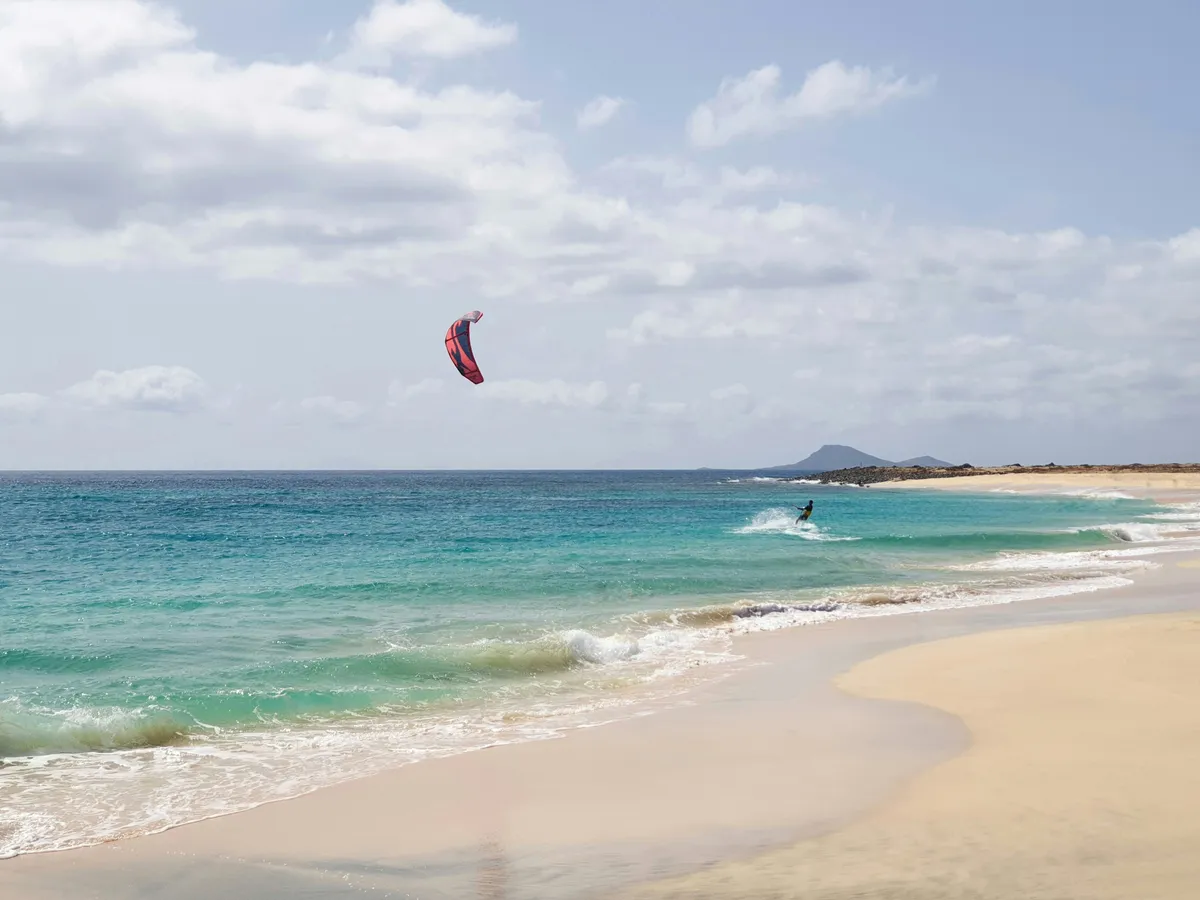
The same trade winds that keep Sal feeling fresh make it one of the best-known wind sports spots in the Atlantic. Kitesurfing centres on Kite Beach and the bays around Santa Maria, where schools teach beginners and rent kit to experienced riders. Windsurfing has a long history here too, and Santa Maria's bay is the usual base. For surfing, Ponta Preta is the name to know: its waves call for experience, so beginners should book a lesson where an instructor chooses the beach.
If you are not a kiter, the wind still matters. It can make a beach day feel cooler than the forecast suggests, and it blows sand around on exposed stretches. Our guide to Cape Verde in winter covers what that means between November and March.
Diving and snorkelling
Sal is a good place to learn to dive or to add easy boat dives to a beach holiday. Scuba diving centres operate from Santa Maria, with reef and wreck sites within a short boat ride. Ask your dive operator about its licence, instructor credentials, certification checks and medical screening before you book.
Snorkelling works best on calm mornings from sheltered spots near Santa Maria, or on a boat trip. On the west coast, the Baía da Murdeira is a designated marine nature reserve within the country's national network of protected areas. Ask your operator about the reserve rules before entering the water. Wind and swell decide everything: if your operator says the water is too rough, believe them.
Wildlife: sharks, turtles and whales
Lemon sharks at Shark Bay
Shark Bay is the trip almost every Sal visitor hears about: you wade in shallow water while young lemon sharks circle nearby. Project Biodiversity, the Sal-based conservation charity, monitors a juvenile lemon shark nursery at Parda Reef in the north-east of the island and reports that lemon sharks are listed as Vulnerable by the IUCN, yet remain unprotected under Cape Verdean law. Follow the charity's wildlife guidance. The charity's responsible tourism guidelines ask visitors never to feed wildlife and to choose government-certified operators and guides. Wear reef shoes for the rocks, keep still, and never touch or chase the sharks.
Turtle watching
Sal is one of the main nesting islands for loggerhead turtles, and night walks to watch a female lay her eggs are popular in summer. They are regulated. Project Biodiversity's turtle season page gives the official observation dates for 2026, as of November 2026, as 1 July until the end of September, excluding specific nesting beaches. Those dates concern 2026; confirm the authorised dates and beaches for a future trip. Winter is outside the nesting-tour window.
The national turtle watching regulation (Decreto-lei n.º 50/2024) sets the rules on the beach. Visitors may only use red-light torches, with white light and flash photography expressly banned. A group of no more than ten visitors approaches each turtle, in a line behind the nature guide, and visitors may never be left alone on the beach. Book turtle watching only with a guided excursion, never on your own.
Whales
Humpback whales use Cape Verde's waters to breed. A good-practice guide for nature excursions, validated by the national environment and tourism directorates, says two populations use the islands: the North Atlantic one from February to May and a Southern Hemisphere one from July to October. The same guide sets a watching zone of no less than 60 metres from the animals, rising to 100 metres when calves are present. Boa Vista is the island most associated with whale watching, but boat trips run from Sal too, so ask your operator how it follows those distances.
Salt, blue water and mirages: the island tour
Sal's inland sights are usually done in one half-day or full-day island tour by 4x4 or minibus, and the three below are the core of it.
- Pedra de Lume salt crater: old salt pans inside a volcanic crater on the east coast, where you can float in the dense brine. The area is designated the Salinas de Pedra de Lume e Cagarral Protected Landscape. Rinse off afterwards and keep the salty water away from your eyes.
- Buracona and the Blue Eye: a rocky inlet on the north-west coast where a pool in the lava lights up blue when the sun is overhead. It sits inside the Buracona-Ragona Protected Landscape. The effect depends on direct sunlight, so a hazy or cloudy day can disappoint, and the rocks are no place for a swim when the sea is up.
- Terra Boa: a flat plain near Espargos where the heat haze produces mirages that look like water. The mirage depends on the conditions.
Tours often add the fishing village of Palmeira and the capital, Espargos. If you want the island as a whole in a few days, our Sal 5-day itinerary and Sal 7-day itinerary slot these in around beach time.
Santa Maria town: pier, food and music
The Santa Maria pier is the town's landmark. A storm partly destroyed it in October 2024 and it is being rebuilt, with completion reported for October 2027, so expect works and restricted access and ask locally what is open. Walk the streets behind the seafront for small bars and restaurants away from the hotel buffets.
Food is worth an evening of its own. Try cachupa, the national stew of hominy, beans and whatever the cook adds, and the fried breakfast version, cachupa refogada. Seafood is the obvious order on the coast: grilled lobster where it is on the menu, búzio (sea snail) and caldo de peixe, the fish broth. Finish with grogue, the sugar cane spirit, or the sweeter ponche.
Evenings in Santa Maria often come with live music. Many bars and restaurants host musicians playing morna and coladeira, and our live music and morna page explains what you are hearing. If your dates line up, the Santa Maria festival is the town's big annual party. Anglers can book sport fishing trips from the town too.
What Sal is not good for
Sal is excellent at what it does and weak at a lot of other things. Knowing that before you book saves disappointment.
- Hiking and green scenery. The island is predominantly flat and arid. For mountain trails, terraced valleys and cool air, go to Santo Antão and read about hiking in Santo Antão, or climb a volcano on Fogo.
- History and culture. Sal has little old architecture. The country's colonial history is on Santiago, at the UNESCO-listed Cidade Velha, and its music culture is strongest in Mindelo.
- Still, calm beach days in winter. The wind that kiters love can make the beach breezy and the sea choppy. If you want flat water every day, Sal in the windy months is not the place.
- Swimming anywhere you like. Many beaches have strong currents and no lifeguard. Stick to supervised water.
- Getting under the skin of Cape Verde on a short stay. Santa Maria is built around tourism. If daily life matters to you, add a second island using our island hopping guide.
Still deciding between the two resort islands? Our Sal or Boa Vista comparison and which Cape Verde island is best guide lay out the trade-offs.
Practical notes
- Getting around: the UK government advises using only authorised taxis from ranks or called by your hotel, and says that on Sal and Boa Vista authorised taxis are blue and yellow. Agree the fare before you set off.
- Safety: the same advice notes that crime is generally low but can include pickpocketing, bag snatching and muggings, particularly in Praia and on Sal and Boa Vista. Our guide to whether Cape Verde is safe has the detail, and emergency contacts lists the numbers.
- Weather: UK advice gives the rainy season as mid-August to mid-October and warns that dust haze (bruma seca) can occur between December and February. See the best time to visit Cape Verde and the weather page.
- Before you fly: check the pre-arrival registration and airport fee on our visa and entry requirements guide, and how to pay for things in currency and money.
Frequently Asked Questions
How many days do you need on Sal?
Three or four days cover the island tour, Shark Bay, a boat trip and plenty of beach time. A week suits people who want to learn to kitesurf or dive, or who simply want a long rest on Santa Maria beach. If you have more time than that, add a second island rather than more days on Sal.
Can you see turtles on Sal in winter?
Winter is outside the nesting-tour season. As of November 2026, Project Biodiversity gives the official observation dates for 2026, as of November 2026, as 1 July until the end of September, excluding specific nesting beaches. Confirm the authorised dates for a future trip. Outside the season, the charity's visitor programme and education work are the way to learn about Sal's loggerheads.
Is it safe to swim at Santa Maria beach?
Swim where a lifeguard is on duty and follow the flags. UK travel advice warns that tides and currents around the islands are very strong and that a red flag means do not go into the water, while yellow means you can walk in but not swim.
Is Shark Bay on Sal worth doing?
It can be a memorable visit if you go with a guide who keeps the group calm and does not feed the sharks. Project Biodiversity reports that lemon sharks remain unprotected under Cape Verdean law; choose an operator who follows its wildlife guidance.
Is Sal good for families?
Yes, for a beach-based holiday with a pool and short excursions. Keep children in supervised water, plan around the wind on exposed beaches, and do not expect green parks or much natural shade outside hotel grounds.
Photo gallery
Kitesurfer riding turquoise water off a sandy beach on Sal island
Photo by Christian Cacciamani on Unsplash · Unsplash License