Cape Verde in Winter: Weather, Wind and What to Pack
From November to March, Sal averages highs of 25C to 28C with almost no rain, and the sea cools from about 26C to 22C. Expect steady trade winds and, from December to February, possible dust haze.
By Cape Verde 365 Editorial Reviewed by Alex Borshch, Founder & Editor
Published November 16, 2026 · 10 min read
Winter sun in Cape Verde: what to expect
Cape Verde (Cabo Verde) stays warm through the northern winter. On Sal and Boa Vista, plan for the dry season, beach days and wind, with swimming decisions based on local conditions. It is not, however, a still and steamy tropical island at this time of year. Winter is the breezy season. North-east trade winds influence the climate, evenings can feel fresh, and from December to February a dust haze called bruma seca can sometimes dull the sky.
Knowing that before you go makes the difference between a good trip and a disappointed one. This guide sets out the numbers for each winter month, explains the wind and the haze, and covers sea temperature, swimming safety and packing.
Temperatures on Sal, November to March
Figures come from the World Meteorological Organization climate normals for 1991 to 2020 for the Sal station, the long-run record for the island's airport area. They are station averages, not limits on the weather during your week.
| Month | Average daily high | Average daily low | Average rainfall |
|---|---|---|---|
| November | 28.1C (83F) | 22.5C (73F) | 1.3mm |
| December | 26.1C (79F) | 20.5C (69F) | 3.4mm |
| January | 25.0C (77F) | 19.2C (67F) | 2.8mm |
| February | 24.9C (77F) | 18.8C (66F) | 0.5mm |
| March | 25.2C (77F) | 18.9C (66F) | 0.5mm |
Rain is almost a non-event: in a typical winter month Sal records less than one day with 1mm or more. The coolest stretch is January to March, when highs sit around 25C and nights drop to about 19C. November is the warmest winter month by a clear margin, with highs above 28C, because the islands are still coming out of their hottest season. For the rest of the year, see the best time to visit Cape Verde.
What about Boa Vista?
The WMO archive used here supplies Sal, Praia and Mindelo files, not a Boa Vista station file. INMG's climate-services page can be opened, although its home page displays a maintenance notice. Its displayed station tables use 1981 to 2010, so they are not mixed with this guide's 1991 to 2020 records. Sal's figures describe Sal, not an official Boa Vista normal. Boa Vista's resorts around Sal Rei and along beaches such as Praia de Chaves and Praia de Santa Mónica sit on open coast, so wind is worth considering when choosing where to spend the day.
The wind: great for kites, a nuisance on the sunbed
The tourism institute recommends December to March for wind-powered sports. The wind comes from the north-east across open ocean and arrives on Sal and Boa Vista with little to slow it down, across their predominantly flat terrain. Several things follow from that:
- Kitesurfers and windsurfers love it. Consider Sal's Kite Beach and Ponta Preta for wind sports, and the tourism institute recommends December to March for wind-powered sports. See kitesurfing and windsurfing.
- Sunbathers need shelter. On an exposed beach, blowing sand and a constant breeze make lying out less pleasant. Consider Santa Maria on Sal, but choose a beach or pool area by the conditions on the day.
- It feels cooler than the thermometer says. A 25C afternoon in a stiff breeze feels fresh, especially after a swim, and evenings call for a layer.
- The sun still burns. A breeze hides the heat, not the ultraviolet. The tourism institute recommends a hat, sunglasses and sunscreen.
The wind also affects boats. Excursions such as snorkelling trips, scuba diving and sport fishing depend on sea conditions, and operators may reschedule on rough days, so keep an excursion you care about early in the week. Ferry crossings between islands are also exposed to weather; read the island-hopping guide before relying on one.
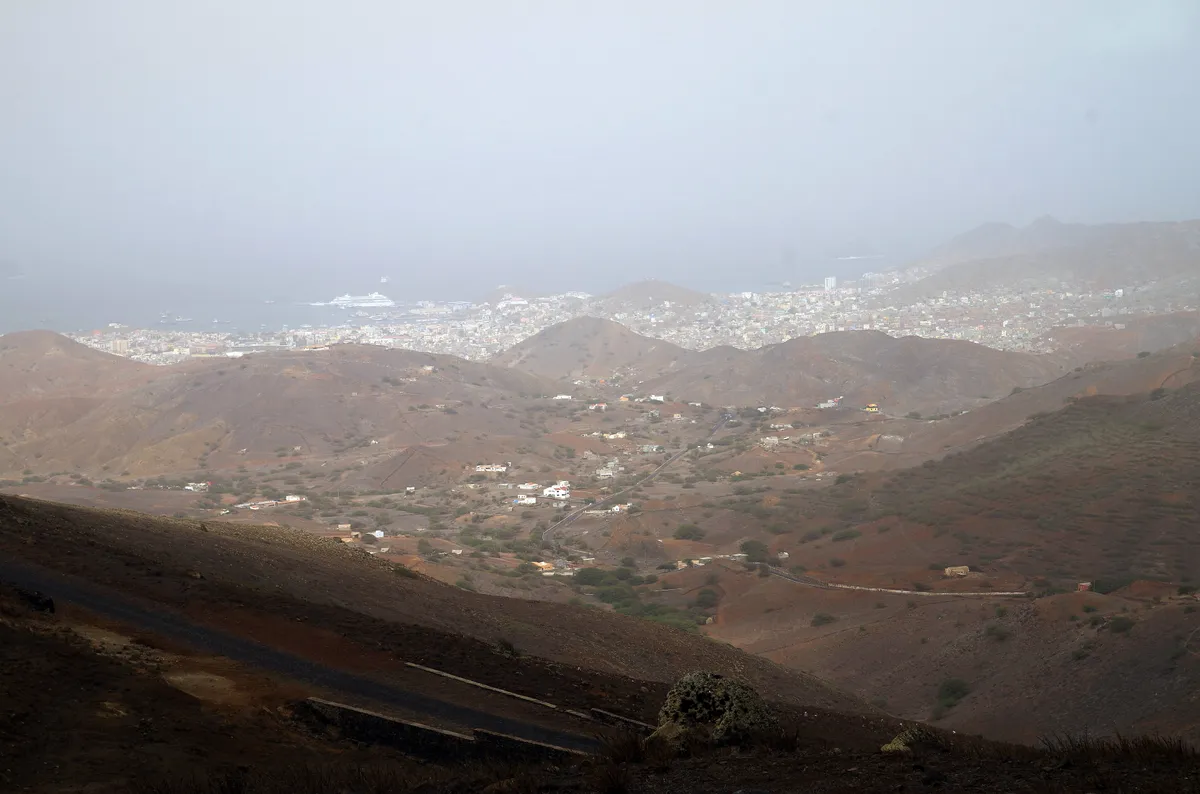
Bruma seca: the winter dust haze
Bruma seca, literally "dry mist", is the local name for dust carried out over the Atlantic from the African mainland. The UK Foreign Office describes these sandstorms as possible between December and February and warns that when intense they can disrupt air travel, especially on Boa Vista. Its advice, if one happens while you are on the islands, is to contact your tour operator or airline.
In practice, a bruma seca day means a pale, hazy sky, softer sunshine and reduced visibility, with intensity varying from year to year. If you have breathing problems, bring your usual medication, and if your flight is delayed by poor visibility, your tour operator or airline is the right first contact. Travel insurance that covers delay is worth checking before you go.
Sea temperature and swimming
Using NOAA NCEI OISST 1991 to 2020 normals at the ocean grid centre 16.625N, 22.875W off Sal, the same source and grid as our weather page, the monthly sea-surface means rounded to whole degrees are:
| Month | Average sea surface temperature |
|---|---|
| November | About 26C |
| December | About 24C |
| January | About 23C |
| February | About 22C |
| March | About 22C |
These are ocean-grid averages, not beach measurements or a promise of comfortable or safe swimming. Consider a thin wetsuit or rash vest for late-winter snorkelling.
The bigger issue is safety, not temperature. The UK Foreign Office says that tides and currents around the islands are very strong, that waves can be unpredictable with a strong undertow, and that sea conditions around Cape Verde can be dangerous. It advises swimming only at beaches with a lifeguard on duty and following the flags: red means do not go into the water, yellow means you can walk in the water but not swim, and green means it is safe to swim. Take extra care on unsupervised stretches of beach. At Santa Maria beach as elsewhere, assess the conditions and follow the lifeguard's instructions.
What to pack for a winter week
- A light windproof jacket or fleece for evenings, boat trips and bruma seca days.
- Long trousers or a long skirt and a long-sleeved top for evenings, when lows of around 19C feel cooler in the wind.
- High-factor sunscreen, a hat that will stay on in the wind, and sunglasses (also useful against blowing sand).
- A rash vest or thin wetsuit if you plan to snorkel in February or March.
- Closed shoes and a warm layer if you plan an excursion to the volcano on Fogo or the mountain trails of Santo Antão, where altitude makes it cooler.
- Lip balm and moisturiser: dry, windy air dries skin quickly.
- Any medication you need, in your hand luggage.
Money and entry are the other two things to sort before departure. See currency and money and visa and entry requirements.
What not to expect in winter
- Still, humid tropical heat. Highs are mid-20s and it is breezy. Sal has its highest average daytime maximum in September, 30.1C; October averages 29.6C. These are averages, not promised daily temperatures.
- Lush green scenery on Sal or Boa Vista. These are desert islands: Sal averages about 75mm of rain in a whole year. The dunes of the Viana desert and the stark plain of Terra Boa are the landscape, and they are striking in their own way.
- Turtle nesting. Loggerhead turtles nest from June to October and hatchlings emerge from August to December, according to Project Biodiversity on Sal, so by midwinter the season is over. Turtle watching is a summer and autumn activity.
- A calm sea everywhere. Currents are strong year-round and winter swell can make exposed beaches unsafe for swimming.
What winter does well
Winter is the best season for wind sports, dependable dry weather and easy sightseeing in the cooler air. On Sal, the floating salt lake at Pedra de Lume, the natural pool at Buracona and the lemon sharks at Shark Bay all make good half-day trips. From late winter, humpback whales arrive: Loro Parque Fundación, which supports whale research on Boa Vista with the local association BIOS.CV, gives the breeding season as February to May, so whale watching becomes possible toward the end of a winter trip. In February, Mindelo Carnival on São Vicente is the cultural high point of the season, with Carnival Tuesday falling on 9 February in 2027 by the Gregorian calendar. Confirm the parade programme separately; the calendar date does not establish public-service closures.
For ideas on structuring the week, see the Sal 7-day itinerary or the Boa Vista 5-day itinerary, and if you have not chosen an island yet, Sal or Boa Vista compares the two.
Frequently Asked Questions
Is Cape Verde hot in January?
It is warm, not hot. The 1991 to 2020 normals for Sal give an average high of 25.0C (77F) and an average low of 19.2C (67F) in January. With the trade winds blowing, afternoons feel pleasant and evenings feel cool enough for a light layer.
Is the sea warm enough to swim in Cape Verde in winter?
Comfort depends on the swimmer and the conditions. NOAA OISST 1991 to 2020 normals for an ocean grid off Sal average about 26C in November, 24C in December, 23C in January and 22C in February and March. Strong currents are the real concern, so swim at lifeguarded beaches and follow the flags.
Is Cape Verde windy in winter?
Yes. North-east trade winds influence the climate, and exposed beaches can feel breezy. That is ideal for kitesurfing and windsurfing, and a nuisance on exposed beaches, so choose a sheltered beach or pool area for sunbathing.
What is bruma seca and will it affect my flight?
Bruma seca is dust haze blown from the African mainland. The UK Foreign Office says these sandstorms can happen between December and February and that, when intense, they can disrupt air travel, especially on Boa Vista. If it affects you, contact your tour operator or airline.
Does it rain in Cape Verde in winter?
Hardly. Sal averages between 0.5mm and 3.4mm of rain a month from November to March, with less than one rain day in a typical month. The rainy season is mid-August to mid-October.
Which is warmer in winter, Sal or Boa Vista?
The WMO archive used here has no Boa Vista file. This guide therefore does not make a numerical comparison: Sal's station normals describe Sal and should not be treated as Boa Vista measurements.
Photo gallery
Dust haze over Mindelo and its bay during a February harmattan
Photo: Balou46 via Wikimedia Commons · CC BY-SA 4.0 (https://creativecommons.org/licenses/by-sa/4.0)