Is Cape Verde Safe? Official Travel Advice, Crime, Sea and Health
The US rates Cape Verde Level 1, with Level 2 advice for Praia; the FCDO publishes precautions for visitors. Watch for petty crime in Praia, Sal and Boa Vista, strong currents, basic medical care and dengue.
By Cape Verde 365 Editorial Reviewed by Alex Borshch, Founder & Editor
Published November 16, 2026 · 10 min read
Is Cape Verde (officially Cabo Verde) safe to visit? The honest answer is to read what the governments that track it say, and to know the specific risks they name. This guide sets out the UK Foreign, Commonwealth and Development Office (FCDO) and US State Department positions as they stand in November 2026, then works through crime, the sea, health, getting between islands, driving and the local laws visitors can break without realising. We add no reassurance or alarm of our own.
What the UK and US governments say
| Government | Current position | Date |
|---|---|---|
| UK (FCDO) | No advice against travel to any part of Cape Verde; general warning that no travel can be guaranteed safe | Updated 28 July 2026, still current at 16 November 2026 |
| US (State Department) | Level 1: Exercise Normal Precautions, due to crime; Praia: Level 2, Exercise Increased Caution | Issued 18 December 2025 |
The State Department's summary says Cabo Verde is generally a safe destination for travelers and that some areas have increased risk. Its full advisory places Praia at Level 2, Exercise Increased Caution, naming petty crime and violent crime including mugging, armed robbery and assault. The FCDO's July 2026 update concerned travelling with medication.
Crime: what happens and where
The FCDO says the crime rate in Cape Verde is generally low, but can include pickpocketing, bag snatching, burglary and muggings, particularly in the capital, Praia, and on the islands of Sal and Boa Vista. It adds that sexual assaults are rare but have been reported.
The FCDO's suggested precautions are practical:
- leave valuables somewhere secure, such as a hotel safe
- keep your belongings in sight in bars and restaurants
- do not carry large amounts of cash or wear expensive jewellery
- avoid unlit and isolated areas after dark
- avoid beaches with limited or restricted visibility
- keep your accommodation's windows and doors locked
In practice that means not leaving a phone on the sand while you swim at Santa Maria beach, walking back along lit streets in Santa Maria or Sal Rei at night, and using a taxi rather than an empty beach path. The FCDO also says there is no recent history of terrorism in Cape Verde, but attacks cannot be ruled out.
The sea: currents, waves and beach flags
The FCDO is direct about the Atlantic here: tides and currents around the islands are very strong, waves can be unpredictable and have a strong undertow. Its advice is to always use beaches where there is a lifeguard on duty, to take care walking close to the water's edge on unsupervised beaches, and to follow lifeguards and the flags:
- Red: danger, do not go into the water.
- Yellow: caution, you can walk in the water but you cannot swim.
- Green: safe to swim.
If you cannot see a lifeguard, treat the beach as one of the unsupervised stretches the FCDO warns about; long, open beaches such as Praia de Santa Mónica on Boa Vista deserve that caution. For water sports such as kitesurfing, surfing or scuba diving, ask a qualified school to assess the conditions before entering. Check the specific beach page before you go: Ponta Preta and Kite Beach on Sal are wind and wave spots, not paddling beaches.
Health risks
The UK's official travel health service, TravelHealthPro (NaTHNaC), and the FCDO name these risks for Cape Verde:
- Stomach bugs: the FCDO says the UK Health Security Agency has investigated an increase in Shigella sonnei and Salmonella in travellers returning from Cape Verde. Reported cases have decreased, but there is still a risk of gastrointestinal illness. TravelHealthPro reported in February 2026 that most Shigella cases had visited Santa Maria and Boa Vista. The advice is good hand hygiene and food and water precautions.
- Tap water: we found no specific verdict on Cape Verde's tap water on the FCDO and TravelHealthPro pages read for this guide. They advise care with personal, food and water hygiene. Follow your hotel's guidance and use bottled or treated water if in doubt.
- Dengue: TravelHealthPro says there is a risk of dengue, spread by mosquitoes that mainly bite in the daytime. The FCDO says the Cape Verde government has raised the civil protection warning level for dengue on Santiago, Fogo and Brava.
- Zika: TravelHealthPro says there is a risk of Zika, and advises pregnant women to discuss travel with a health professional.
- Malaria: TravelHealthPro says the WHO declared Cape Verde malaria-free in 2024 and that there is no risk of malaria, while recommending bite avoidance. Its outbreak log also records 16 locally acquired malaria cases in Praia reported as of 21 August 2025. Ask a travel health clinician if you are heading to Praia.
- Altitude: the FCDO notes altitude sickness is a risk on Fogo, relevant if you are climbing Pico do Fogo.
Use insect repellent by day as well as in the evening, and see a travel health clinic at least 8 weeks before you go, as the FCDO recommends.
Medical care, evacuation and insurance
The FCDO says medical facilities are basic and limited, some medicines are in short supply or unavailable, and medication is only available from pharmacies. The largest hospitals are in Praia on Santiago and in Mindelo on São Vicente, with smaller clinics elsewhere; facilities are particularly limited on Boa Vista. Brava and Santo Antão have no working airports, so medical air evacuation from there is extremely difficult.
Two points follow directly from the FCDO advice:
- Insurance is essential. The UK Global Health Insurance Card (GHIC) is not accepted in Cape Verde. Your policy should cover local treatment and medical evacuation, and any activities you plan.
- Quad bikes are a special case. The FCDO calls quad biking an extreme sport that is unlikely to be covered by standard insurance, and says that after a quad bike accident you will highly likely need medical evacuation. Check your cover before booking desert and dune tours on a quad.
Bring enough of any prescribed medicine for the whole trip plus a few days' spare in hand luggage.
Getting between islands: expect disruption
Island hopping is one of the joys of Cape Verde, but the FCDO is clear that sea conditions around the islands can be dangerous and that sea travel to the southern islands of Brava and Fogo in particular can often be disrupted. It advises following local advice before travelling by sea. Air travel has its own weather risk: sandstorms, called bruma seca, can happen between December and February and, when intense, can disrupt flights, especially on Boa Vista. Build spare days into any itinerary that depends on a ferry or domestic flight, and never plan to catch an international flight home on the same day as an inter-island connection. Our island-hopping page and island-hopping guide cover the options.
Weather, earthquakes and volcano country
The FCDO says the rainy season runs from mid-August to mid-October, and torrential rain on some islands can cause flooding and landslides. It also says tremors are felt occasionally, mostly on Brava and Fogo, usually within normal bounds but sometimes dangerous; check with your travel provider before travelling to those islands. For seasons, see the best time to visit Cape Verde and our weather page.
Driving, taxis and buses
- Licences: the FCDO says a valid UK photocard licence can be used for up to 6 months; paper licence holders need the 1968 International Driving Permit as well. You will be arrested if you are found driving without a licence.
- Hire vehicles: check that a car, scooter or quad is in good condition and fully insured. Hire firms often want a year of driving experience, a higher minimum age and an IDP.
- Helmets: wearing a crash helmet on a scooter or quad bike is a legal requirement, and riding without one may invalidate your insurance.
- Taxis: only use authorised taxis from ranks or called by your hotel. On Sal and Boa Vista, authorised taxis are blue and yellow.
- Intercity buses: the FCDO says they can be dangerous because of poor driving.
More on transport is on our transportation page.
Laws visitors break by accident
- Drugs: severe penalties for possessing, using or trafficking, including fines and long prison sentences.
- No helmet on a scooter or quad: an offence, as above.
- Driving without a licence: the FCDO says this leads to arrest.
- Travelling with someone else's child: children aged 17 and under without a parent or guardian need a certified letter of authorisation in Portuguese, or may be refused entry.
- Pre-registration: the FCDO says that from 1 July 2026, failing to complete pre-registration or show proof means paying double the airport security fee at border control, as of November 2026. See our entry requirements guide.
The FCDO also notes British nationals have had problems buying property in Cape Verde and advises independent legal advice first.
Emergency numbers
| Service | Number |
|---|---|
| Ambulance | 130 |
| Fire | 131 |
| Police | 132 |
These are the numbers the FCDO lists. Save them, your insurer's emergency line and your hotel's number before you go, and see our emergency contacts page.
Choosing where to go
The FCDO names Praia, Sal and Boa Vista for petty crime, Brava and Fogo for sea disruption and tremors, Boa Vista for limited medical facilities and sandstorm flight disruption, and Brava and Santo Antão for difficult evacuation. Use that to plan: for example, hikers on Santo Antão should carry insurance with evacuation cover. Compare islands in which Cape Verde island is best and Sal or Boa Vista.
Frequently Asked Questions
Is Cape Verde safe for tourists?
The US State Department rates Cabo Verde Level 1, Exercise Normal Precautions, citing crime (issued 18 December 2025), with Praia at Level 2, Exercise Increased Caution. The UK FCDO does not advise against travel to any part of the country. Both name petty crime, and the FCDO stresses strong sea currents and basic medical care.
Where is crime most common in Cape Verde?
The FCDO names the capital Praia and the islands of Sal and Boa Vista for pickpocketing, bag snatching, burglary and muggings. Use a hotel safe, avoid unlit and isolated areas after dark, avoid secluded beaches and do not carry large amounts of cash.
Is it safe to swim in Cape Verde?
Only with care. The FCDO says tides and currents around the islands are very strong and waves can have a strong undertow. Swim only where a lifeguard is on duty and obey the flags: red means stay out, yellow means wade but do not swim, green means swimming is safe.
Can you drink the tap water in Cape Verde?
We found no specific verdict on Cape Verde's tap water on the UK official health pages read for this guide. They advise care with food and water hygiene, and note cases of Shigella and Salmonella in returning travellers. Follow your hotel's advice and use bottled or treated water if in doubt.
Is there malaria or dengue in Cape Verde?
TravelHealthPro says the WHO declared Cape Verde malaria-free in 2024 and lists no malaria risk, though it also logged locally acquired cases in Praia in 2025. It says there is a risk of dengue and Zika. Avoid mosquito bites day and night.
What are the emergency numbers in Cape Verde?
The FCDO lists 130 for an ambulance, 131 for the fire service and 132 for the police. Medical facilities are basic, so also keep your travel insurer's emergency assistance number to hand.
Are ferries and domestic flights in Cape Verde reliable?
Not always. The FCDO says sea travel to Brava and Fogo in particular can often be disrupted, and sandstorms between December and February can disrupt flights, especially on Boa Vista. Leave spare days and avoid same-day connections to international flights.
Do I need travel insurance for Cape Verde?
Yes. The FCDO says the UK GHIC card is not accepted, care is basic and limited, and evacuation from some islands is extremely difficult. Choose a policy that covers local treatment, medical evacuation and any activities such as quad biking.
Photo gallery
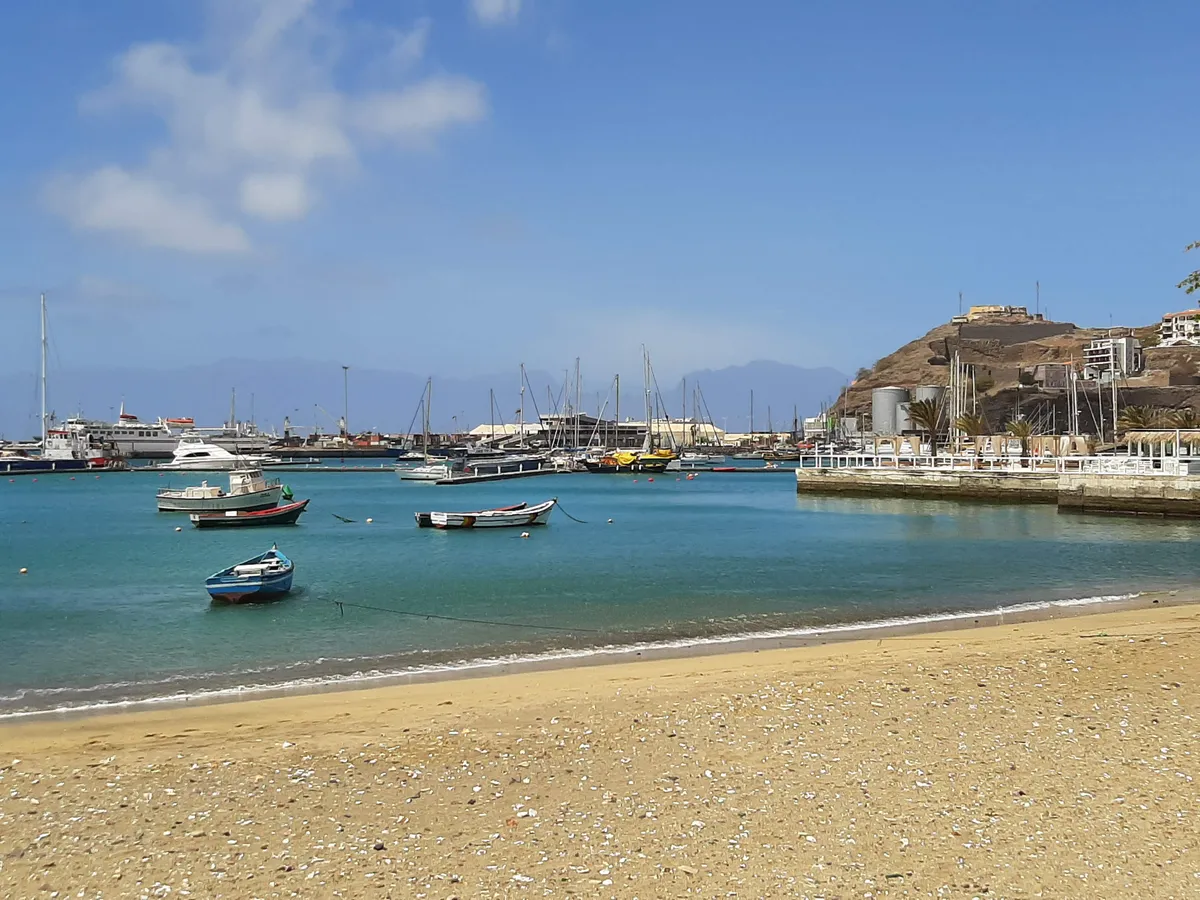
Calm beach and moored boats in the harbour of Mindelo, Sao Vicente
Photo: Popenguine05 via Wikimedia Commons · CC BY-SA 4.0 (https://creativecommons.org/licenses/by-sa/4.0)